

NEWS
Thought leadership
&
industry news

Waters Economics with Swire Properties and HKU, panelists for the Urban Land Institute Global Webinar on Places
Fiona Waters with Swire Properties Don Taylor and Alain Chiaradia of Hong Kong University, who formed the Panel for the global Urban Land Institute (ULI) webinar on the Impact of Place.
Swire Properties recently published the first Places Impact Report, which was produced in partnership with Fiona at Waters Economics and Alain, Hong Kong University.

Places Impact with Swire Properties and HKU
SWIRE PLACES IMPACT REPORT
The Places Impact Report was created in partnership with Swire, Waters Economics and Professor Alain JF Chiaradia, Associate Professor, Programme Director Master of Urban Design at The University of Hong Kong, Faculty of Architecture, Department of Urban Planning and Design*
*This report reflects the views of Swire Properties. The use of “The University of Hong Kong | FoA | DUPAD” does not imply the University’s endorsement of or responsibility for the particular activity, product, or publication involved.
Swire Properties Publishes Places Impact Report
The Places Impact Report was created in partnership with Swire Properties, Waters Economics and Professor Alain JF Chiaradia, Associate Professor, Programme Director Master of Urban Design at The University of Hong Kong, Faculty of Architecture, Department of Urban Planning and Design*
This exciting new report is the first of its kind, creating a Places Impact Framework that can be replicated and introducing Four Dimensions of Place: Vibrancy, Livelihood, Wellbeing and Resilience.
*The report reflects the views of Swire Properties. The use of “The University of Hong Kong | FoA | DUPAD” does not imply the University’s endorsement of or responsibility for the particular activity, product, or publication involved.

Waters Economics is Re-Established
Waters Economics was re-established in November 2019 after a brief period of merger with an Australian-based firm. We are happy to report new partnerships and projects and thank all of our clients, colleagues and friends for their support over the last 8 years.
After a brief period of a merger with an Australian-based firm, Waters Economics was re-established in late 2019 and is currently serving clients in Hong Kong, Asia and the UK.
We take this opportunity to thank our clients, colleagues and friends for the support and continued great working relationships over the last 8 years.
We have recently forged exciting new partnering relationships with Globe Creative in Destination-Making, with Value People for Investment Business Case and with Urban.AV for Innovation in the Built Environment.
We look forward to new and exciting projects, even in these difficult times. Never has the importance of a well-rounded investment approach incorporating business and community needs been greater, and we work collaboratively to emerging from the pandemic and rebuilding our economies, livelihoods and communities.
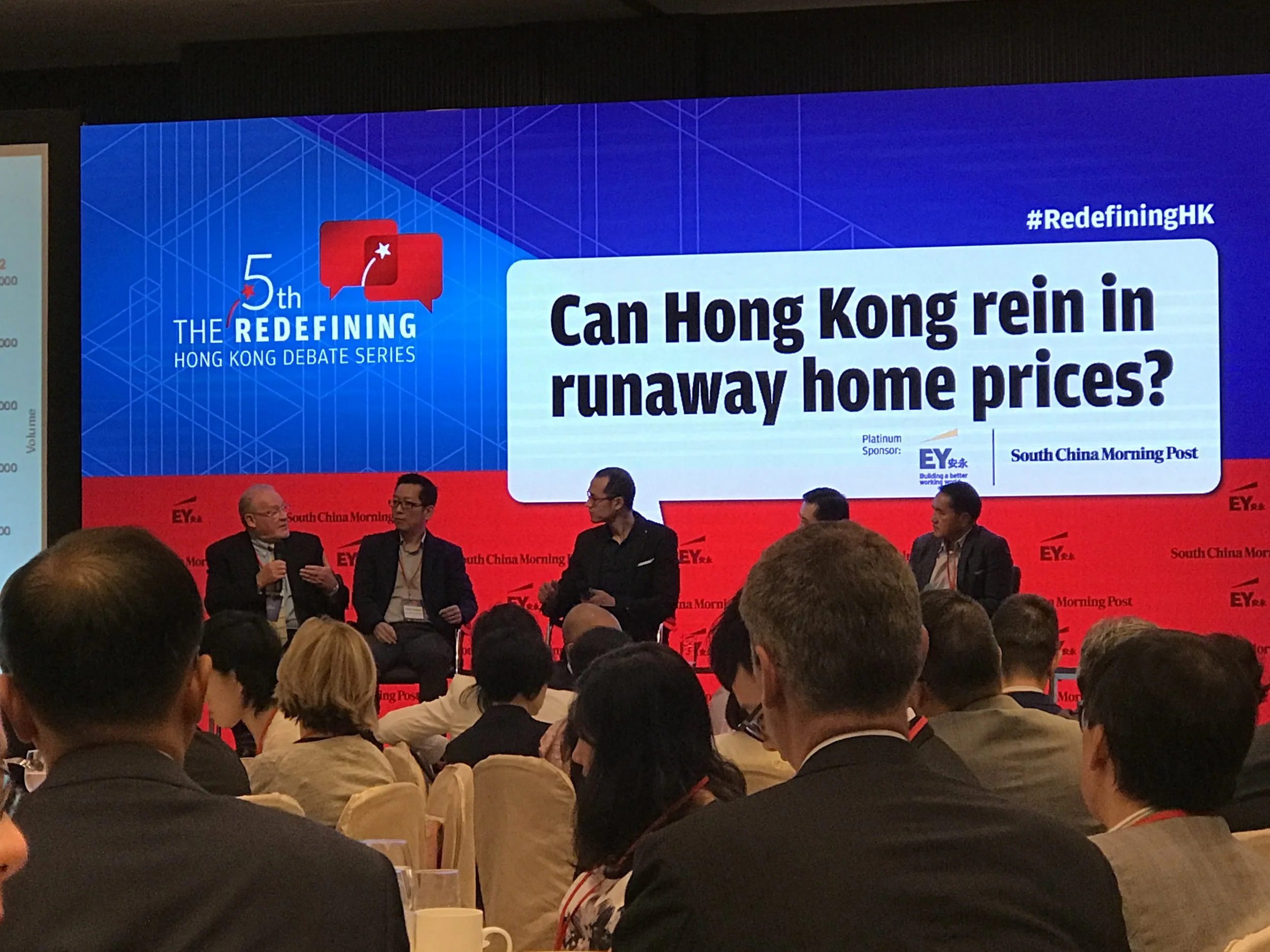
Waters Economics on reigning-in house prices
Colin Arnott, Director of Research, speaks as one of the expert panelists in the South China Morning Post’s fifth “Redefining Hong Kong” debate series : “Can Hong Kong rein in runaway housing prices?”
Colin Arnott, Director of Research, speaks as one of the expert panelists in the South China Morning Post’s fifth “Redefining Hong Kong” debate series : “Can Hong Kong rein in runaway housing prices?”
The panel of experts, moderated by Yonden Lhatoo, the Chief News Editor of South China Morning Post, discussed the economic and social challenges of the escalating residential market and the ability for Hong Kong to implement policies to curb housing prices.
Other panelists included Lee Win-tat from Landwatch, Buggle Lau from Midland Holdings and Dr. Yanto Chandra from City University of Hong Kong.
Panelists concluded that there were several policy measures that could help curb soaring prices but that external forces were likely to continue to put upward pressure on the residential market in the foreseeable future.

Waters Economics responds to Hong Kong 2030+ Public Engagement
Waters Economics has submitted our response to the public engagement process for Hong Kong 2030+. We commend the government for sharing the strategy with the public and requesting views.
Waters Economics has submitted our response to the public engagement process for Hong Kong 2030+. We commend the government for sharing the strategy with the public and requesting views.
Whilst we have considerable reservations about the analysis undertaken, the strategy direction itself, and concerns about its implementation, it is none-the-less a step in the right direction to engage the public and importantly, private businesses. After all, business drives the economy, contributes tax revenue and a strategy suitable for business growth and development is a prerequisite to achieving other sustainable development objectives.
Our submission presented four key themes for consideration:
1. Identifying Future Opportunities and Threats
Addressing the challenges of an ageing population, taking advantage of the opportunities presented by the urban agglomeration of the Pearl River Delta and global trends.
2. Appreciation of the Spatial Economy
Hong Kong’s most significant comparative advantage is its dense inner core. Ignoring this and allocating growth in isolated segments across Hong Kong is not a practical option for the continued growth of the city. In creating new employment nodes it is vital to conduct an analysis of the location requirements of different economic sectors. The target number of jobs to residents for the two Strategic Growth Areas (NTN and ELM) is more than 3 times the average of NT districts and higher than all non-CBD districts. These targets are not practical or achievable without strong incentive mechanisms.
3. Alternative Scenarios
We believe it is important to consider alternatives and to explain to the public why the chosen option is preferred. We cannot see any economic justification for the ELM and suggest that the government consider alternative scenarios that better match economic, sustainability, and livability criteria. There are opportunities for further densification in the metro area. There are also opportunities in the NT to create a cluster of jobs & economic activity with a large enough critical mass, that is supported by good transport infrastructure to attract businesses and people.
4. Implementation Strategy
We suggest the government consider carefully alternative approaches to bringing land forward for development. Land held in private sector land banks is approximated at 900ha, whilst the economic and social uses land requirement in HK2030+ is 500ha. We see enormous potential in engaging with the private sector and bringing forward land held in private sector land banks for development.

Our recommendations for the conceptual spatial framework presented in Hong Kong 2030+
If you would like to receive a copy of our submission please get in touch with us. enquire@waterseconomics.com

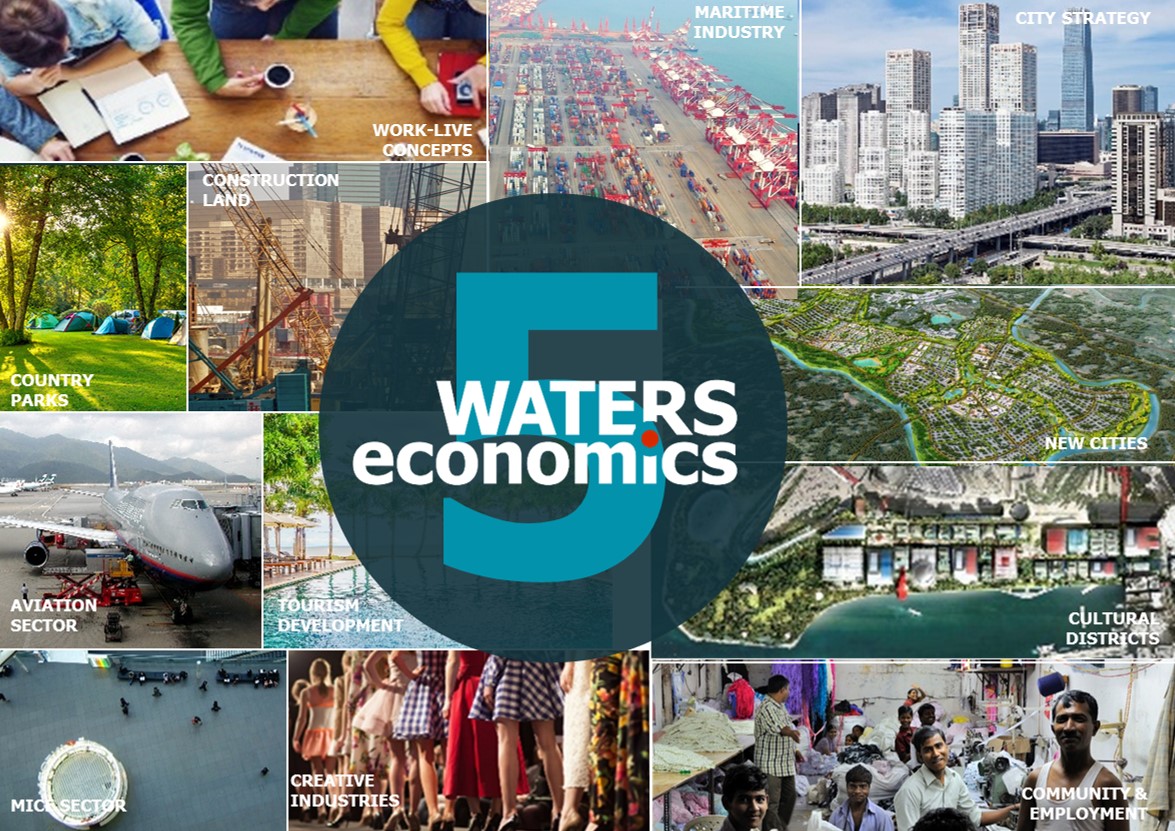
Waters Economics celebrates its 5th Birthday!
Thank you to all our friends and colleagues for your help & support in the success of Waters Economics over the last 5 years. We look forward to the great opportunities ahead!
Thank you to all our friends and colleagues for your help & support in the success of Waters Economics over the last 5 years. We look forward to the great opportunities ahead!
5 Years | 8 Countries | 40+ Projects
Fiona Waters | Managing Director
Kristen Saul | Associate Director Colin Arnott | Director of Research
Bethanie Finney | Senior Consultant Jackson Hui | Consultant
Yuan Fang | Junior Consultant
Waters Economics on a Disrupting Property Market
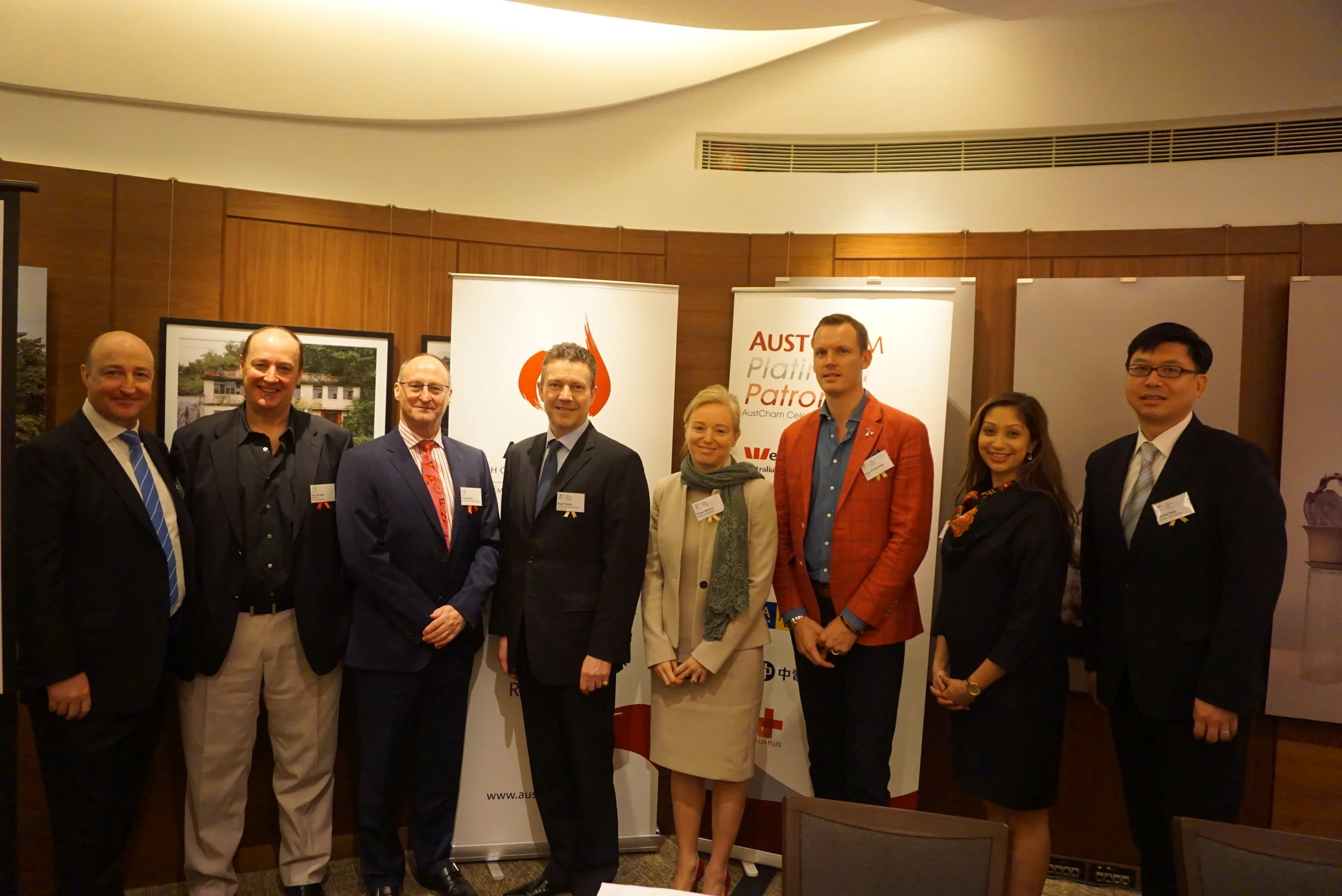
Fiona Waters, Managing Director, speaks at the Australian Chamber of Commerce event ‘A Disrupting Property Market: Locational Strategies for the Next Paradigm’
Fiona Waters, Managing Director, speaks at the Australian Chamber of Commerce event ‘A Disrupting Property Market: Locational Strategies for the Next Paradigm’. The panel of senior leaders, moderated by Nigel Smith from Colliers International, discussed the opportunities and challenges facing companies when reviewing their real estate options in Hong Kong. Other speakers on the panel included Daniel Shih from Colliers International, Guy Parsonage from PwC, and Michelle Buultjens from Blueprint.
Fiona introduced the Waters Economics Spatial Economy Model, which tracks employment and businesses in 73 sectors, across the 18 districts in Hong Kong, over 15 years. Fiona suggested that sometimes some of the trends that we perceive to be happening only from anecdotal evidence, are not true when we look at the actual data. It is important to consider both!
Fiona’s message: Beware only looking at newspaper headlines!! Understand the data too!
Mass Exodus from Central started many years ago – Not Quite True!
We tend to think that employment in Central & Western (C&W) District has been on the decline for years – not so - employment in C&W was still growing up to 2014 and had the largest share of jobs of all districts. It wasn’t that C&W was declining, it was that other districts were growing faster. 2015 was the first year in which the total number of jobs in C&W were lower than the year before.
Indeed, in some sectors the number of jobs in C&W is still growing, these include Finance & Insurance Activities and Administrative & Support Services.
Kwun Tong is rapidly expanding in sectors such as Finance and Insurance – Not Quite True!
Employment in Kwun Tong was on the rise in all sectors up to 2014, but in 2015 growth was in sectors which are declining in Hong Kong overall, including Manufacturing, Import & Export Trade and Wholesale Trade.
Whilst the sector has experienced rapid growth in Kwun Tong over the last decade, Financial services saw a decline in numbers in 2015; Real Estate Services were also on the decline.
Fiona’s message: Don’t deny the power of networks and proximity!
Whilst there is lots of discussion about a future CBD2, Kwun Tong and other locations, Fiona had the audience laughing when she pointed out that whilst companies may have offices in these locations, actually nobody likes going there and senior people especially, stay in Central. There is a sound reason for this. The power of clustering and dense business networks in an urban core is one of Hong Kong's comparative and competitive advantages.
Waters Economics speaks at British Chamber Evening Seminar on Hong Kong 2030+
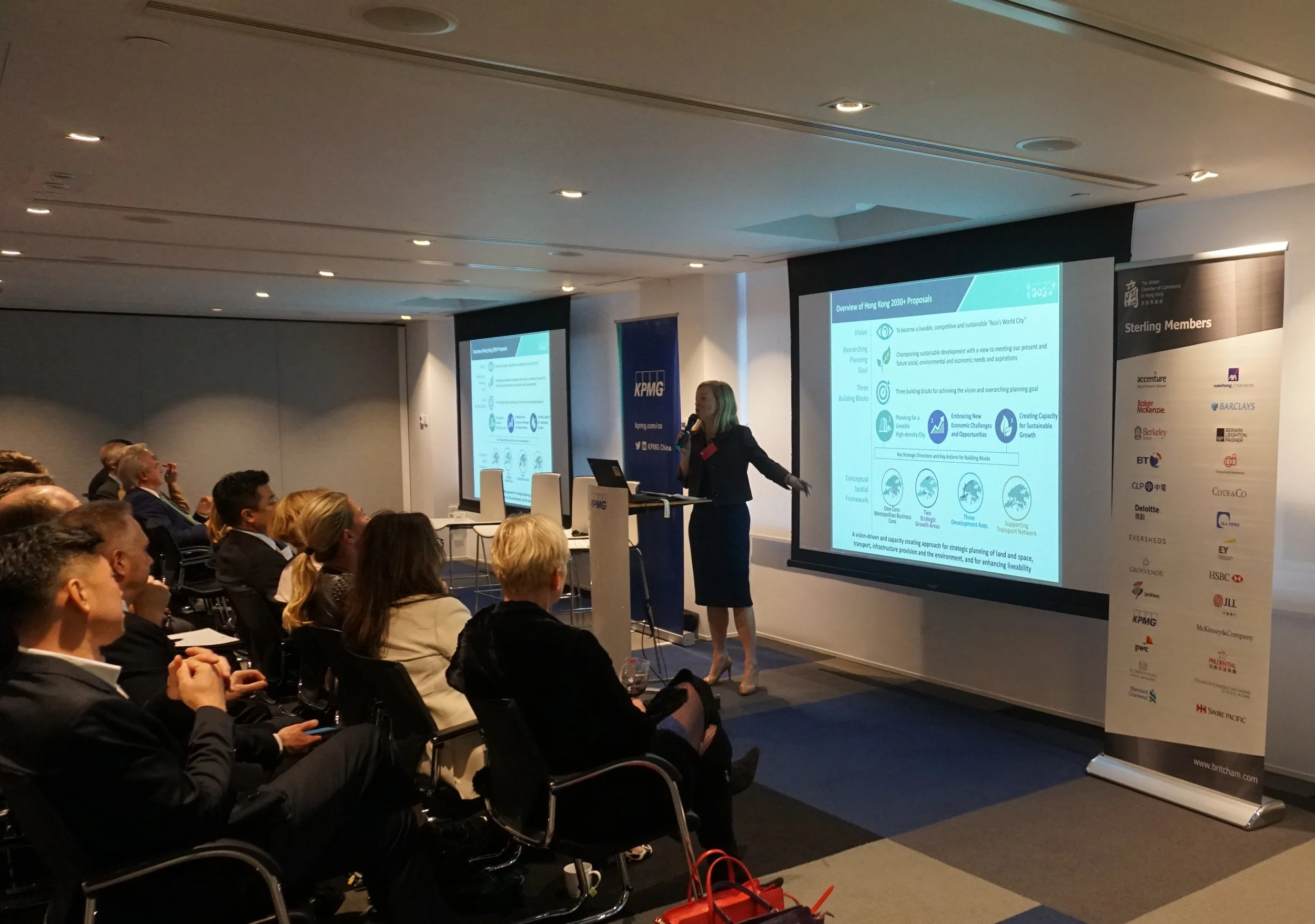
Fiona Waters, Managing Director, spoke at a British Chamber Evening Seminar on ‘Hong Kong 2030+’, the government’s planning vision and strategy for 2030 and beyond which is in its first stage of public consultation.
Fiona Waters, Managing Director, spoke at a British Chamber Evening Seminar on ‘Hong Kong 2030+’, the government’s planning vision and strategy for 2030 and beyond which is in its first stage of public consultation.
The event, attended by about 70 people, intended to encourage ideas, provoke debate and provide a framework for the British Chamber to provide a contribution to the public consultation. The event included Roger Nissim providing perspectives on population, Peter Cookson-Smith providing perspectives on livability, whilst Fiona provided an economists perspective on the strategy.
Fiona congratulated the government for sharing the strategy and asking for comments and ideas. However, she highlighted some observations, major concerns and made three key points:
- The strategy shows no/little understanding that businesses cluster in the CBD and metro area because of the sizeable comparative advantage of agglomeration. The strategy suggests that in the future the development areas in the New Territories will have a balance of jobs to population that is almost as high as the current CBD. This idea of creating self-contained but relatively small new towns has never worked, more people commute to the metro area than ever before. An additional 400,000 jobs are anticipated in the NT. This either needs a strong policy and incentive implementation plan or it simply won’t work. Putting jobs on a map without thorough analysis and implementation strategy as to how it can be achieved, is simply misleading the public. We would like to see an analysis of and strategy for employment growth that incorporates both type of economic sector (finance, trade etc) AND location.
- The strategy pays lip service to the huge opportunity of the Peal River Delta, the world’s largest urban agglomeration. Whilst global trends and opportunities are noted in the background papers, there is little or no application in the strategy itself. We would like to understand how the strategy makes the best use of Hong Kong’s advantages and the opportunity of the PRD.
- The strategy does not present any assessment of alternative options considered or a rationale as to why the proposed option best fulfills the stated objectives. We note that some 900ha of land is held in developer land banks in the New Territories. If we disregard the land needed for quarries and the like, the land supply requirement is about 900ha! We would like to see an alternative option that makes the most of infill and upzoning in the metro area and the building up of a critical urban mass in the New Territories. We surmise that a review of such an option will demonstrate the fallacy of the East Lantau Metropolis which is simply a political sidestep to avoid suggesting development anywhere there may be objections, and should be dropped at the earliest opportunity.
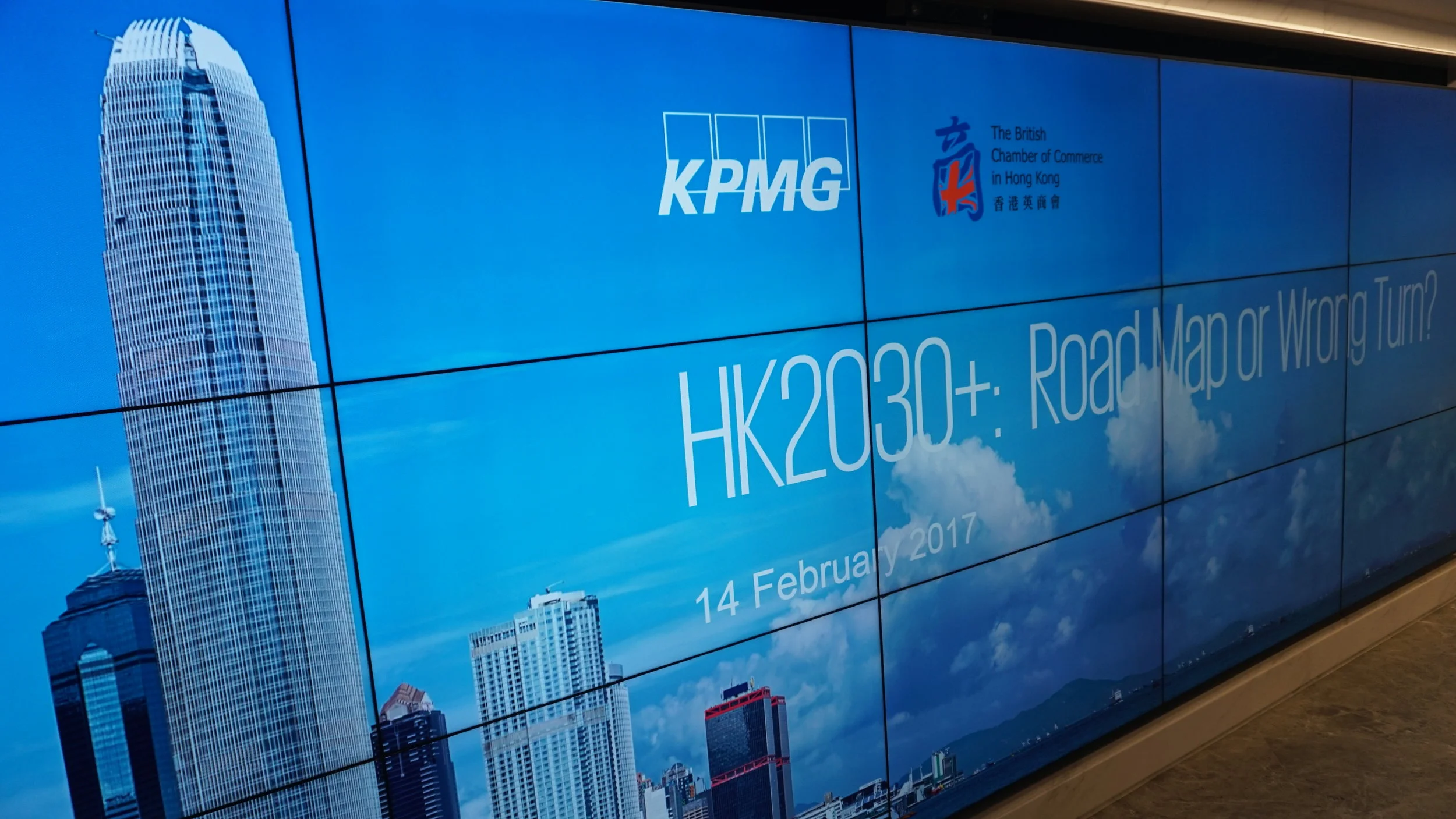
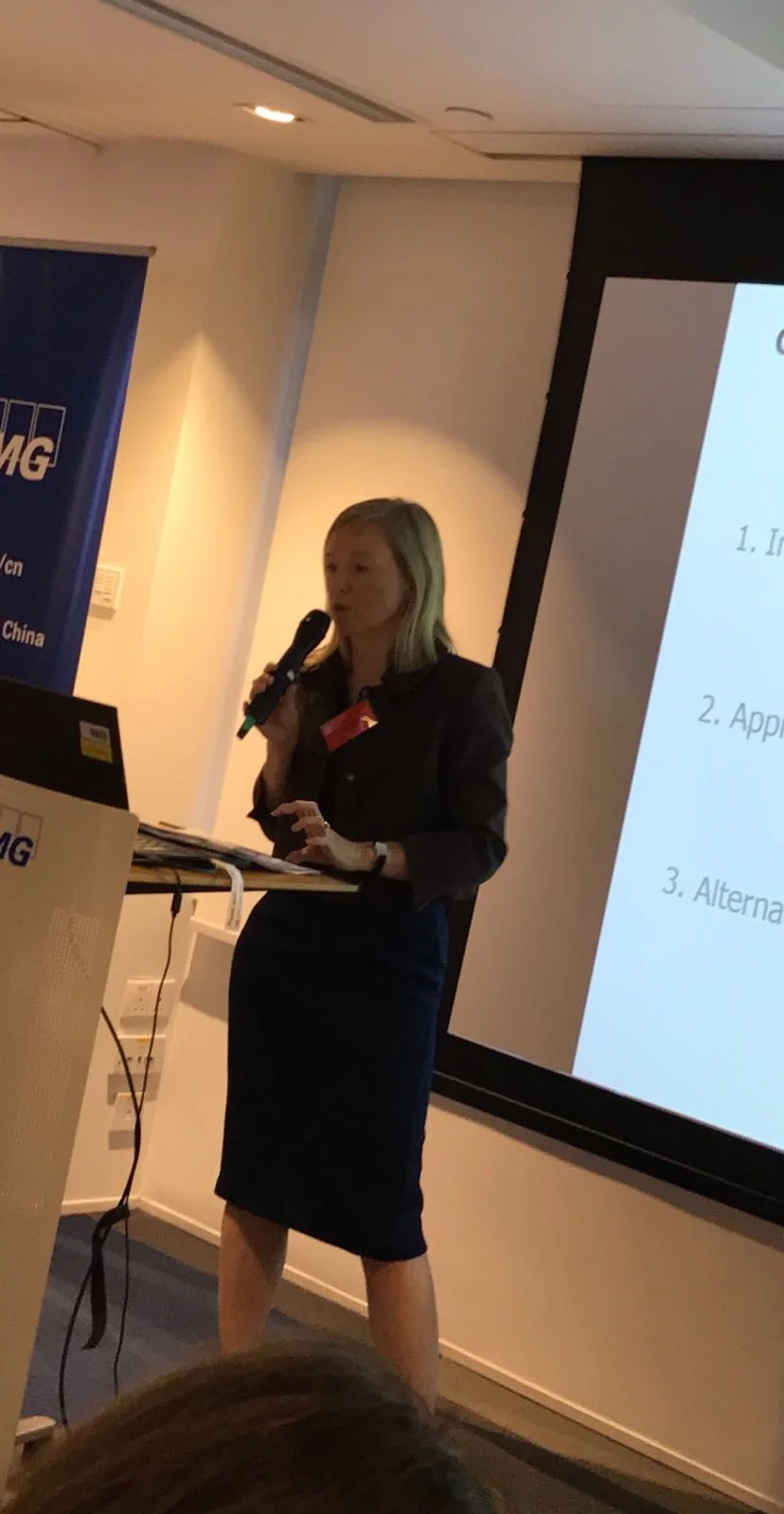
Images courtesy of The British Chamber of Commerce in Hong Kong

Waters Economics responds to Public Engagement on Underground Space
Basic facts and assessments missing from the public engagement digest including needs and demand assessment and analysis of alternatives
overall comments
Whilst we appreciate the conceptual nature of this study, that is still at an early stage, there are basic facts and assessments we consider are missing from the public engagement digest and summary of work completed to date. These include:
•Needs and demand assessment
•Analysis of alternatives
•General facts about the proposal, such as scale and type of use
•Broad financial and economic feasibility assessments
Specific Response
1. What are the major community needs in the four strategic urban areas?
In conjunction with the technical analysis we would expect to see a needs and demand analysis, in order to come up with proposed uses for the underground space and estimated demand for these.
The lack of any demand assessment is particularly worrying since it seems to be a growing trend in government studies to ignore demand! It is simply not good enough to come up with some vague ideas and then ask the general public about needs! Be rigorous, do some analysis, then by all means ask the public.
In order to provide suitable comment we would need to have a better understanding of the analytical evidence of the need and demand for community and commercial facilities.
Additionally, when assessing demand for retail and F&B facilities the demand will be driven, not just from within the local community but by Hong Kong residents and workers as well as visitors.
2. Do you agree the major community needs could be addressed by underground space development in the strategic urban areas?
•No we don’t agree, we need some evidence and analysis in order to provide a practical response.
•There should be an assessment of alternatives to examine various options for increasing land supply for community facilities before deciding on underground space as the most suitable option.
•This would include a proper analysis of all types of land (such as developing caverns or better utilisation of space at the fringe) to relocate all facilities that don’t need to be there, before developing underground spaces.
3. What are your vision and expectation of underground space development?
•The proposals presented in the PE digest are so vague as to be useless, we cannot comment as there is no detail given about the scale (e.g. GFA) or types of use. What is the target GFA or are there any other targets to achieve in developing underground space?
•At a conceptual level, additional connections underground would be useful, particularly for connections to existing subway networks, MTR stations and offices. However, any underground development should only be undertaken with a commensurate improvement to the public realm at grade and only once sensible rationalisation of land uses on the surface has been undertaken.
4. What are your concerns on underground space development in the four strategic urban areas?
•We are concerned about the major costs (capex & opex) and the disruption that construction would cause. The financial feasibility needs to be carefully assessed.
•We also have concerns about the waste of resources in this study in doing detailed technical assessments when the basic demand analysis, analysis of alternatives and broad order financial and economic assessments do not appear to have been undertaken. There is no point to proceed if these aspects of the study do not yield positive results.
5. Do you have other comments on underground space development in the four strategic urban areas?
•Consideration needs to be given to how to attract retailers and F&B operators to the underground space. Pedestrian flows need to be large enough to guarantee business for these operators otherwise they are unlikely to setup there. Connection to the MTR and existing offices is important.
•Valuing the land resources that are freed up by underground space needs further study, it depends on what land is being freed up, if any, its proposed use and the proposed uses of the underground space.

Waters Economics launches the Hong Kong Spatial Economy Model
Waters Economics has developed a new spatial economy model for Hong Kong
Waters Economics has developed a new Spatial Economy Model for Hong Kong which looks at how economic activity is distributed throughout the city. The model covers 18 administrative district areas in Hong Kong and over 70 industry sector activities based on the Hong Kong Standard Industrial Classification (HKSIC). Population, persons engaged, number and size of establishments are analysed over a 15 year time period (2000 to 2015).
This model is a powerful tool which will be of interest to real estate commentators and investors, developers, city planners, policy-makers and anyone interested in the ongoing sustainable development of Hong Kong.
What is the Spatial Economy?
The spatial economy refers to the scale, type and distribution of people and economic activity across a geographical area. By looking at the economy and location at the same time, we can see the different roles that areas play, where different industrial sectors are clustered, how this has changed over time, and what this means in the context of new planned areas.
Example Analysis for Import and Export Trade Sector
The import and export trade industry is one of the largest employers in Hong Kong with almost 1 in 5 persons in private organisations working in this sector. However, the number of people employed has decreased in the last five years. The map shows how employment is distributed across Hong Kong, which areas are growing and which are declining. It highlights clusters of employment such as Kwun Tong where employment has increased over the last five years and Yau Tsim Mong, where employment has declined considerably. New pockets of growth are seen in Wong Tai Sing and Yuen Long.

